




 Combo Offers
 Daily Offers

 Family Pack
 Food
Food
 Baby Food & Care
 Home Cleaning
 Beauty & Health
 Fashion & Lifestyle
 Home & Kitchen
 Stationeries
 Toys & Sports
 Pet Care
 Combo Offers


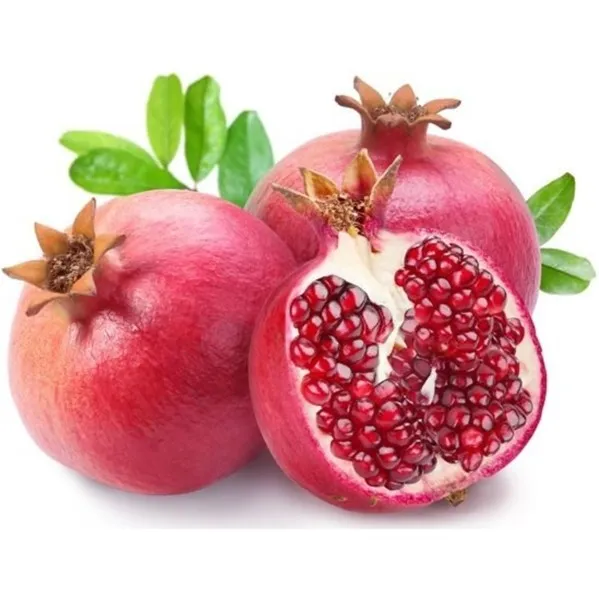
The pomegranate is a shrub or small tree growing 1.5 to 5 m (5 to 16 ft) high, with multiple spiny branches.[5] It is long-lived, with some specimens in France surviving for 200 years.[6] The leaves are opposite or subopposite, glossy, narrow oblong, entire, 1.9–5 cm (0.7–2.0 in) long, and 0.8–1.5 cm (0.3–0.6 in) broad.[5]
The flowers are bright red or white, and 3 cm (1+1⁄4 in) or more in diameter, with three to seven petals.[5][6] Some fruitless cultivars are grown for the flowers alone.[15] The flower's anthers close around the stigma until maturity, and the ovaries are divided internally into compartments or locules of many suspended ovules covered by a septum.[16]
The pomegranate fruit husk is red-purple with an outer, hard pericarp, and an inner, spongy mesocarp (white "albedo"), which comprises the fruit's inner wall where seeds attach.[17] Membranes of the mesocarp are organised as nonsymmetric chambers that contain seeds which are embedded without attachment to the mesocarp,[17] also a result of fertilisation of the divided ovary. Pomegranate seeds are characterised by having sarcotesta, thick fleshy seed coats derived from the integuments or outer layers of the ovule's epidermal cells.[18][19] The number of seeds in a pomegranate can vary from 200 to about 1,400.[20] Botanically, the fruit is a berry with edible seeds and pulp produced from the ovary of a single flower.[18] The fruit is variable in size, from 2–8 cm (1–3 in) in diameter in wild plants (to 12 cm (4.7 in) in some cultivars) with a rounded shape and thick, reddish husk.[5][6] In mature fruit, the juice obtained by compressing the seeds yields a tart flavour due to low pH (4.4) and high contents of polyphenols,[21] which may cause a red indelible stain on fabrics.[22] The pigmentation of pomegranate juice primarily results from the presence of anthocyanins and ellagitannins.[21][23]
Login To Review
The pomegranate is a shrub or small tree growing 1.5 to 5 m (5 to 16 ft) high, with multiple spiny branches.[5] It is long-lived, with some specimens in France surviving for 200 years.[6] The leaves are opposite or subopposite, glossy, narrow oblong, entire, 1.9–5 cm (0.7–2.0 in) long, and 0.8–1.5 cm (0.3–0.6 in) broad.[5]
The flowers are bright red or white, and 3 cm (1+1⁄4 in) or more in diameter, with three to seven petals.[5][6] Some fruitless cultivars are grown for the flowers alone.[15] The flower's anthers close around the stigma until maturity, and the ovaries are divided internally into compartments or locules of many suspended ovules covered by a septum.[16]
The pomegranate fruit husk is red-purple with an outer, hard pericarp, and an inner, spongy mesocarp (white "albedo"), which comprises the fruit's inner wall where seeds attach.[17] Membranes of the mesocarp are organised as nonsymmetric chambers that contain seeds which are embedded without attachment to the mesocarp,[17] also a result of fertilisation of the divided ovary. Pomegranate seeds are characterised by having sarcotesta, thick fleshy seed coats derived from the integuments or outer layers of the ovule's epidermal cells.[18][19] The number of seeds in a pomegranate can vary from 200 to about 1,400.[20] Botanically, the fruit is a berry with edible seeds and pulp produced from the ovary of a single flower.[18] The fruit is variable in size, from 2–8 cm (1–3 in) in diameter in wild plants (to 12 cm (4.7 in) in some cultivars) with a rounded shape and thick, reddish husk.[5][6] In mature fruit, the juice obtained by compressing the seeds yields a tart flavour due to low pH (4.4) and high contents of polyphenols,[21] which may cause a red indelible stain on fabrics.[22] The pigmentation of pomegranate juice primarily results from the presence of anthocyanins and ellagitannins.[21][23]
Ratings & Reviews
-
No Review Found
Login To Review
Related Products
Out of Stock !
Out of Stock !
Out of Stock !
Out of Stock !

0 Item
৳ 0

Ratings & Reviews
No Review Found