




 Combo Offers
 Daily Offers

 Family Pack
 Food
Food
 Baby Food & Care
 Home Cleaning
 Beauty & Health
 Fashion & Lifestyle
 Home & Kitchen
 Stationeries
 Toys & Sports
 Pet Care
 Combo Offers


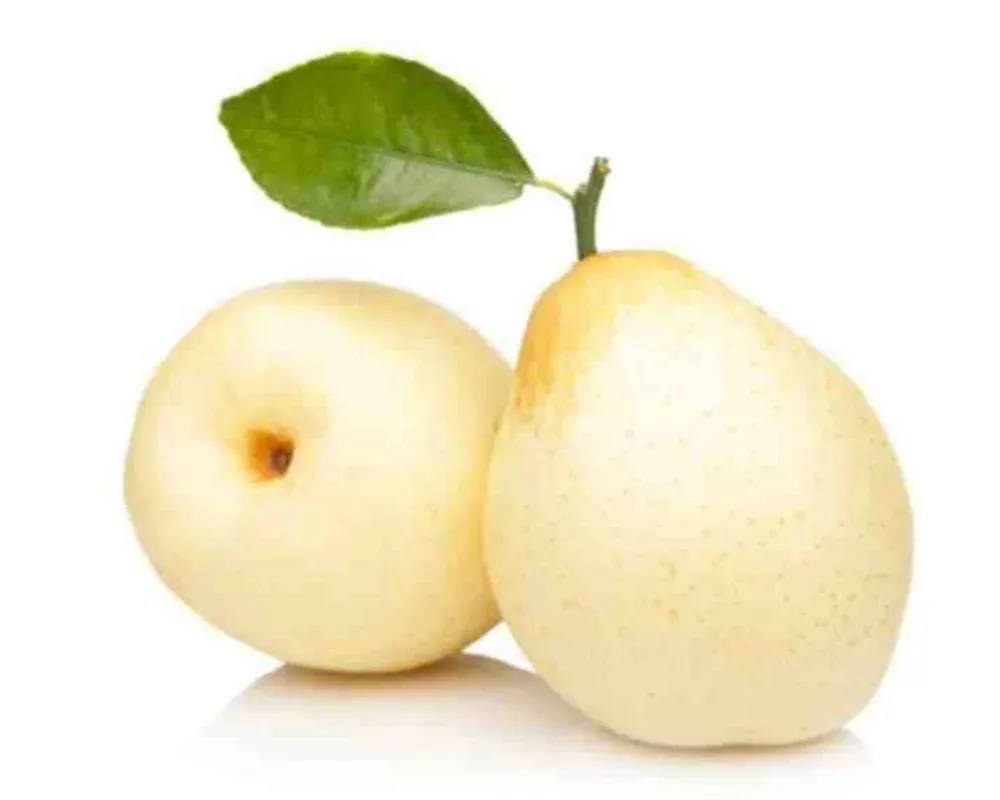
Pears are mostly small or medium-sized trees; a few of the species are shrubby, and some are thorny.[4] The leaves are alternately arranged, simple, 2–12 cm (1–4+1⁄2 in) long, glossy green on some species, densely silvery-hairy in some others; leaf shape varies from broad oval to narrow lanceolate.[5] Most pears are deciduous, but one or two species in Southeast Asia are evergreen.[5][6] Some pears are cold-hardy, withstanding temperatures as low as −25 to −40 °C (−13 to −40 °F) in winter, but many grown for agriculture are vulnerable to cold damage.[7][8] Evergreen species only tolerate temperatures down to about −12 °C (10 °F).[9]
The flowers are white, rarely tinted yellow or pink, 2–4 centimetres (1–1+1⁄2 in) diameter, and have five petals, five sepals, and numerous stamens.[5][10] Like that of the related apple, the pear fruit is a pome, in most wild species 1–4 cm (1⁄2–1+1⁄2 in) diameter, but in some cultivated forms up to 18 cm (7 in) long and 9 cm (3+1⁄2 in) broad.[5] The shape varies in most species from oblate or globose, to the classic pyriform 'pear shape' of the European pear with an elongated basal portion and a bulbous end.[8]
The fruit is a pseudofruit composed of the greatly swollen receptacle or upper end of the flower stalk (the so-called calyx tube).[5] Enclosed within its cellular flesh is the true fruit: 2–5 'cartilaginous' carpels,[7][11] known colloquially as the "core".[5] Pears and apples cannot always be distinguished by the form of the fruit;[12] some cultivated pears look very much like some apples, e.g. the nashi pear.[13]
Login To Review
Pears are mostly small or medium-sized trees; a few of the species are shrubby, and some are thorny.[4] The leaves are alternately arranged, simple, 2–12 cm (1–4+1⁄2 in) long, glossy green on some species, densely silvery-hairy in some others; leaf shape varies from broad oval to narrow lanceolate.[5] Most pears are deciduous, but one or two species in Southeast Asia are evergreen.[5][6] Some pears are cold-hardy, withstanding temperatures as low as −25 to −40 °C (−13 to −40 °F) in winter, but many grown for agriculture are vulnerable to cold damage.[7][8] Evergreen species only tolerate temperatures down to about −12 °C (10 °F).[9]
The flowers are white, rarely tinted yellow or pink, 2–4 centimetres (1–1+1⁄2 in) diameter, and have five petals, five sepals, and numerous stamens.[5][10] Like that of the related apple, the pear fruit is a pome, in most wild species 1–4 cm (1⁄2–1+1⁄2 in) diameter, but in some cultivated forms up to 18 cm (7 in) long and 9 cm (3+1⁄2 in) broad.[5] The shape varies in most species from oblate or globose, to the classic pyriform 'pear shape' of the European pear with an elongated basal portion and a bulbous end.[8]
The fruit is a pseudofruit composed of the greatly swollen receptacle or upper end of the flower stalk (the so-called calyx tube).[5] Enclosed within its cellular flesh is the true fruit: 2–5 'cartilaginous' carpels,[7][11] known colloquially as the "core".[5] Pears and apples cannot always be distinguished by the form of the fruit;[12] some cultivated pears look very much like some apples, e.g. the nashi pear.[13]
Ratings & Reviews
-
No Review Found
Login To Review
Related Products
Out of Stock !

Out of Stock !
Out of Stock !
Request Item
Out of Stock !

0 Item
৳ 0

Ratings & Reviews
No Review Found